
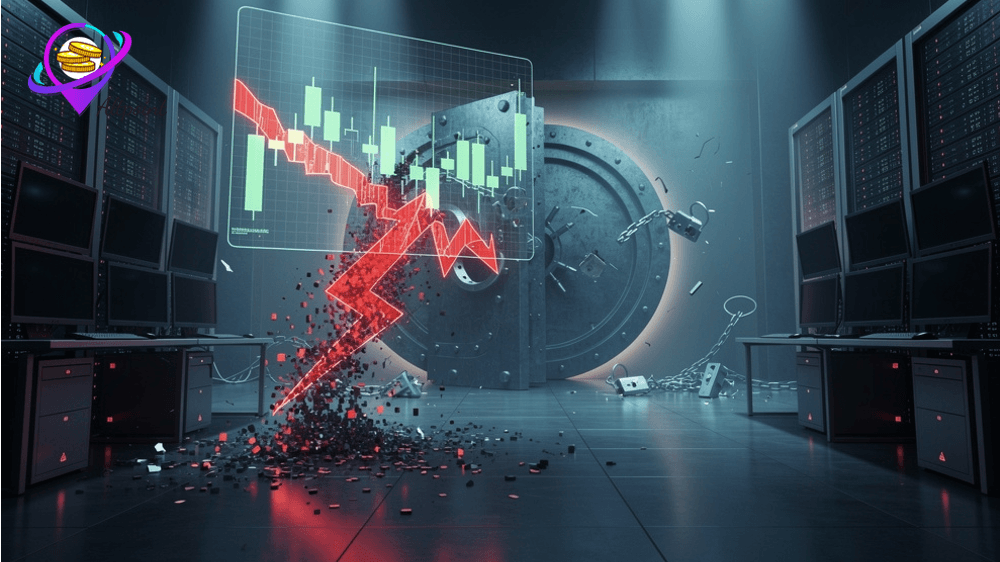
BitMEX has confirmed it will permanently close operations in September. The exchange is often credited with inventing the perpetual swap in 2016. It may not be the last to go.
BitMart also told users they have 30 days to close trades and six months to withdraw funds. The announcement did not include a specific reason. Some users are already worried about delays. Given how quickly things are moving, that concern feels reasonable.
A wave of closures
At least three crypto-related firms announced closures or bankruptcy filings in the past week. Movement Labs and Storj Labs filed for Chapter 11. That makes four failures in seven days, according to reports. The pattern is becoming hard to ignore.
Jason Fernandes, co-founder of AdLunam, thinks the root cause is simple. Retail trading volume has collapsed. He points out that interest in Telegram groups has dropped significantly. In his view, exchanges that depend on retail traders will keep struggling. He does not expect a return to 2021 levels anytime soon.
Trading volume keeps falling
The numbers back him up. Spot trading volume across major centralized exchanges fell to $1.05 trillion by April 2026. That is the lowest monthly total in 25 months, based on the CoinDesk Data Exchange Review. In South Korea, the top five exchanges saw trading volume drop by 88%, according to Colin Wu.
That is a major shift. It is also a reminder that the industry has changed. For years, platforms like BitMEX survived on reputation and high-leverage trading habits. That model is no longer enough.
Regulation changes the math
New rules are also making life harder for smaller venues. The European Union’s MiCA framework adds compliance costs that many regional exchanges cannot absorb. Institutional players want proof of reserves and cross-asset trading. Retail hype no longer covers the bills.
It is possible some exchanges will adapt. But the current wave of closures suggests the industry is entering a quieter, more cautious phase. Those that survive will likely need more than a loyal user base. They will need a sustainable business model that does not rely on speculative trading alone.
The early freewheeling era of crypto trading may be over. That is not necessarily a bad thing. But for exchanges still hanging on, the next few months could be brutal.
