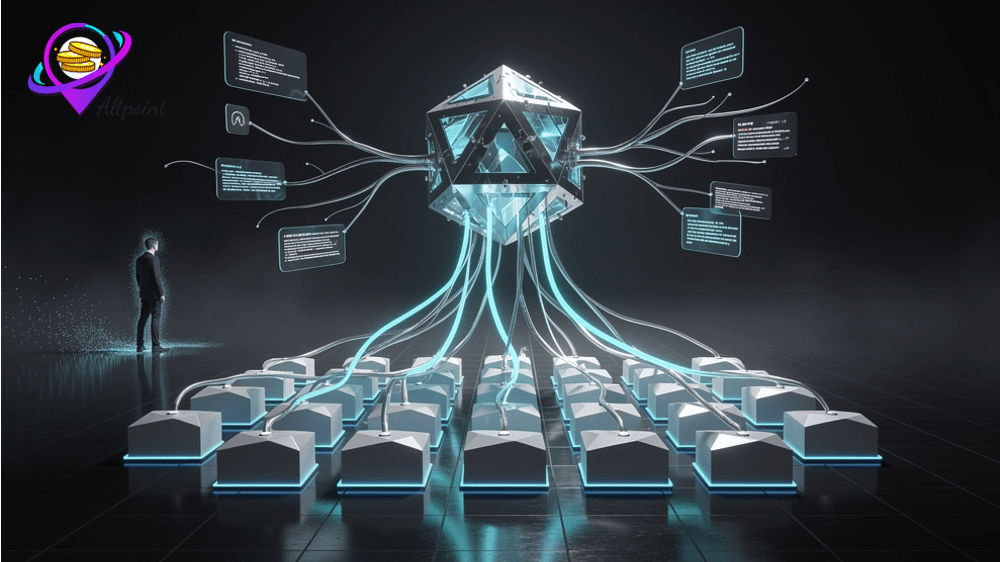
DeepSeek has outlined a design for AI coding assistants that can handle more tasks with less human coordination. The proposal comes from the company’s DeepSeek Harness team, according to a paper reported by Singapore’s South China Morning Post on Sunday.
The basic problem is attention. The team said single-task limits depend on model capabilities, while multitask limits depend on human attention. In practice, a person can watch only three to five active AI agent sessions at once. That makes it hard to scale coding work simply by adding more agents.
A system to split and coordinate work
DeepSeek’s proposed setup would distribute tasks among agents and coordinate their work. Humans would step in mainly to review results and make decisions. The aim is to reduce the time spent monitoring multiple agents, not remove people from the process entirely.
That distinction matters. Coding agents still need direction, checks, and judgment. But if a system can manage handoffs and keep agents from duplicating work, a developer might supervise more output without constant switching. Perhaps the biggest gain is less context switching, though the paper’s design is still a proposal, not a shipped product.
Competition pushes agent research
The paper arrives as AI developers compete on agentic tools. The SCMP report points to US companies Anthropic and OpenAI as part of that race. DeepSeek’s plan fits a broader push to make AI assistants useful across longer workflows, not just single prompts.
DeepSeek has already drawn attention for cost efficiency. Cointelegraph reported last October that Chinese AI models were outperforming US counterparts in a crypto trading experiment, based on data from blockchain analytics platform CoinGlass. DeepSeek led that test and was the only model to generate a positive unrealized return of 9.1%. Traders were surprised because DeepSeek was developed at a fraction of the cost of its US rivals.
What to watch
The coding agent proposal is not a product announcement. It is a research direction. The key question is whether coordination among agents works in real projects with messy requirements and limited review time. If it does, small teams could manage more coding work without adding more people to watch every session. If it does not, the bottleneck simply moves from writing code to checking it.