
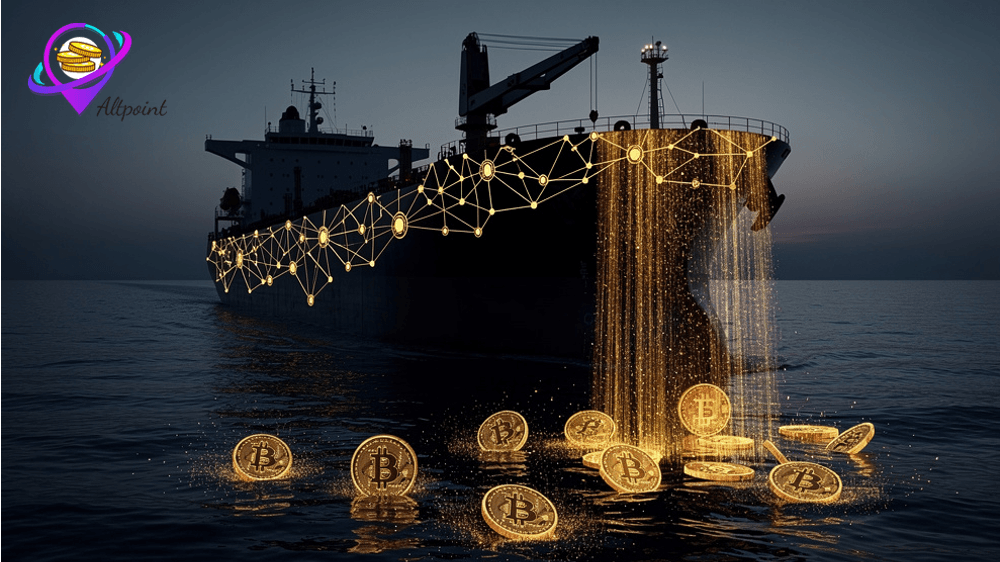
Bitcoin Community Debates Iran’s Reported Crypto Toll Plans
The Bitcoin community has been actively discussing reports that Iran might start accepting Bitcoin payments for oil tanker tolls in the Strait of Hormuz. This conversation started after the Financial Times published an article on Wednesday suggesting the Iranian government was looking at Bitcoin as a way to avoid U.S. sanctions.
It’s a pretty significant development, I think, because the Strait of Hormuz handles about 20% of the world’s oil supply. That’s not a small amount of traffic. But here’s where things get a bit messy—there are conflicting reports about what exactly Iran plans to do.
Conflicting Reports and Practical Concerns
Alex Thorn from Galaxy, a crypto investment firm, mentioned that other reports suggest the tolls might actually be payable in stablecoins or Chinese yuan. That makes sense from a stability perspective, but then there’s the sanctions issue to consider.
Justin Bechler, a Bitcoin advocate, pointed out something important about stablecoins. They can be frozen by their issuers, and with compliance controls like those in the GENIUS regulatory framework, Iran probably wouldn’t want to collect tolls in U.S.-dollar stablecoins. “Bitcoin has no issuer, no compliance officer to pressure, and no freeze function,” he said. “Iran’s pivot toward Bitcoin follows directly from this structural reality.”
I’m not entirely convinced this is a done deal, but the discussion itself is revealing. If Iran did start accepting Bitcoin for these payments, it would certainly boost Bitcoin’s credibility as a neutral settlement layer for international transactions. That’s what advocates are saying, anyway.
How Would the Payments Actually Work?
Thorn estimated that each oil tanker would need to pay between $200,000 and $2 million in tolls. That’s not pocket change. The Financial Times report mentioned ships would have “a few seconds” to complete payment in Bitcoin, which suggests they’d be using the Lightning Network.
For those who don’t know, the Lightning Network is a layer-2 payment solution that allows Bitcoin transactions to settle in seconds rather than waiting for the usual 10-minute block confirmation. It’s designed for exactly this kind of quick payment scenario.
But there’s a catch. Thorn noted that the largest known transaction over the Lightning Network to date has been for $1 million. So if a tanker needs to pay $2 million, they might need to split it into multiple transactions. That adds complexity.
The Practical Implementation
Thorn suggested a more likely scenario: “The Iranian authorities would provide a QR code or alphanumeric Bitcoin address to the ships upon approval of their requests to pass through the Strait.” That seems more practical than trying to process million-dollar Lightning transactions in seconds.
QR codes would be simple enough—the ship’s captain scans, sends Bitcoin, and gets confirmation. But then you have the volatility issue. Bitcoin’s price can swing significantly during the time it takes for a tanker to pass through the strait. Maybe they’d use some kind of price oracle to lock in the dollar value at the moment of payment.
It’s all speculation at this point, but the fact that we’re even having this conversation shows how far Bitcoin has come. Whether it’s actually happening or not, the idea that a nation-state might use Bitcoin to bypass sanctions for critical infrastructure payments is… well, it’s something to think about.
Personally, I’m skeptical about the timeline. These things usually take longer to implement than initial reports suggest. But the discussion itself is valuable—it forces us to consider Bitcoin’s practical applications beyond just being a store of value or speculative asset.
